
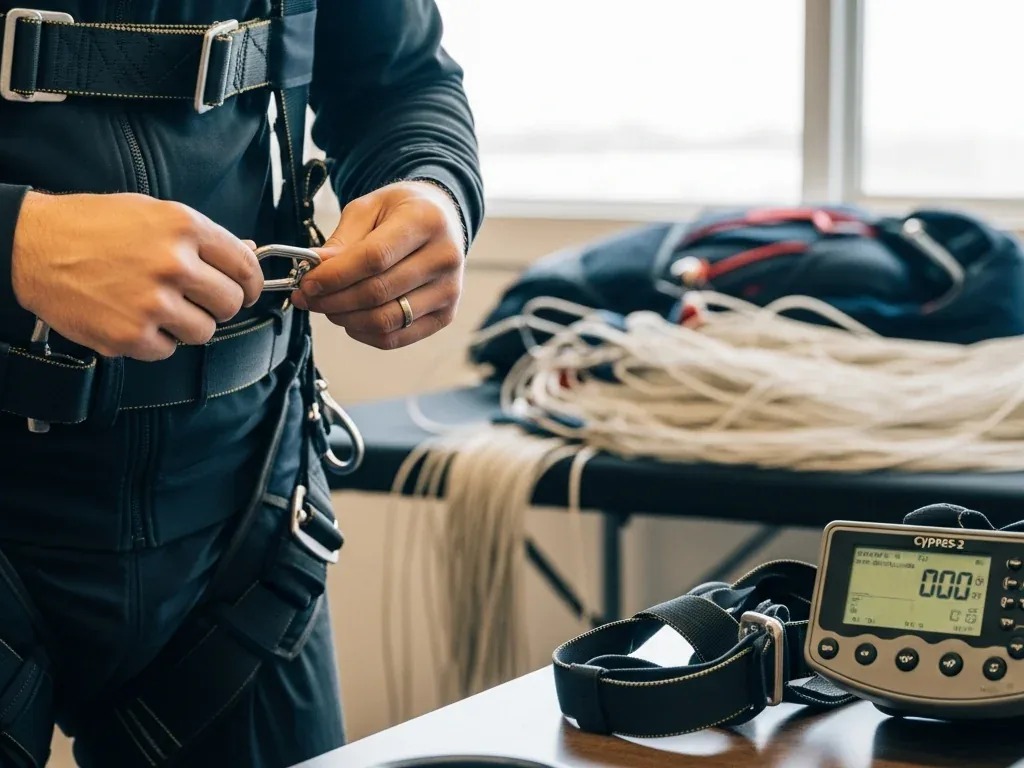
Ensuring robust safety protocols for skydiving operations from luxury yachts in Bali is paramount. Our procedures strictly adhere to USCG/ABYC standards for vessel integrity and operational safety, alongside STCW, ISM, and ISPS frameworks for crew training and security, guaranteeing a secure and controlled environment for every jump.
Understanding Yacht Safety Regulations for Skydiving Platforms
When conducting skydiving operations from a luxury yacht in Bali, the vessel itself becomes an integral part of the safety chain. Our yachts, typically over 26 feet, are mandated to comply with stringent USCG (United States Coast Guard) and ABYC (American Boat & Yacht Council) standards. These regulations cover everything from structural integrity to electrical systems and fire suppression. For us, this means that the platform from which a skydiver exits is built and maintained to the highest possible maritime safety specifications. The integration of skydiving activities requires additional considerations, such as clear, unobstructed jump zones and robust retrieval protocols for both skydivers and equipment. The vessel’s stability is continuously monitored, especially when positioned for jump operations, to ensure a steady and predictable platform.
Crew training extends beyond standard maritime practices to include specific emergency responses tailored for skydiving incidents at sea. This comprehensive approach ensures that every aspect of the operation, from pre-jump checks to potential water landings and recovery, is managed with the utmost professionalism and adherence to established safety benchmarks. Our commitment to these standards is unwavering, providing peace of mind for both our guests and our operational teams.
Mandatory Safety Equipment and Quantities on Board
Adherence to USCG mandatory safety equipment requirements is non-negotiable for all our luxury yachts. Each vessel is outfitted with specific items in precise quantities to handle any emergency at sea.
- Life Jackets (PFDs): We provide a minimum of one USCG-approved Type I, II, or III PFD for every person on board. Additionally, each yacht carries one Type IV throwable device, a critical piece of equipment for man-overboard situations.
- Fire Extinguishers: USCG-approved B1 or B2 fire extinguishers are strategically placed throughout the vessel. The exact quantity scales strictly with the yacht’s size and the number of compartments, ensuring comprehensive coverage.
- Visual Distress Signals: Required USCG-approved aerial or handheld flares are always on board, complemented by a strobe light for night-time emergencies or low visibility conditions.
- Communication: A dedicated Marine VHF radio with constant Channel 16 access is standard on all our yachts, ensuring reliable communication with shore and other vessels.
- Medical Kit: Our medical kits are extensive, including serious lifesaving equipment such as defibrillators (AEDs) to address critical medical emergencies promptly.
- Navigation: Each yacht is equipped with USCG-compliant navigation lights, along with a whistle, horn, or bell, the specific type determined by the vessel’s length.
Crew Certification and Training Protocols
The competency and readiness of our crew are central to our safety philosophy. All seafarers on our commercial vessels over 79 feet (24 metres) are required to hold STCW (Standards of Training, Certification and Watchkeeping for Seafarers) certification. This comprehensive training covers essential skills such as First Aid, Fire Fighting, and handling High-Risk Situations, ensuring our crew is prepared for a broad spectrum of emergencies.
Regular drills are a cornerstone of our operational readiness. We organise and meticulously document frequent fire, man-overboard, and abandon-ship drills. These exercises are not merely procedural; they are designed to hone our crew’s response times and coordination under pressure. Prior to any departure, all individuals on board, including guests, are thoroughly acquainted with the exact location and proper use of life jackets, fire extinguishers, and first aid kits. Detailed emergency response plans are in place for man-overboard, fire, and medical emergencies, with each crew member having a defined role and responsibility. Furthermore, scheduled maintenance routines with meticulous record-keeping for all critical systems, including the engine, electrical, and bilge pumps, ensure every component of the yacht is in optimal working condition.
Advanced Technological and Security Systems
Our commitment to safety extends to advanced technological and security systems. To prevent unauthorized access to interior ship areas, we implement biometric fingerprint access systems. This measure adds an extra layer of security, controlling who can access sensitive parts of the vessel. For long-range warning and deterring potential threats, our yachts are equipped with Yacht LRAD (Long-Range Acoustic Hailing Devices). These systems are crucial for maintaining security in open waters and ensuring the safety of all on board.
2027 Operational Logistics and Future Outlook
As of 2027, our operational logistics for skydiving from luxury yachts are streamlined to integrate seamlessly with the latest maritime and aviation safety standards. We are continually evaluating new technologies and refining our protocols to enhance safety and efficiency. This includes exploring advanced weather prediction models specific to the Bali region and integrating real-time data feeds into our pre-jump briefings. Our focus remains on proactive safety measures and continuous improvement, ensuring our guests experience both exhilaration and absolute security.
FAQ
What specific certifications do your yacht crews hold for safety?
All our commercial vessel crews over 79 feet (24 metres) hold STCW certification, which includes extensive training in First Aid, Fire Fighting, and managing High-Risk Situations at sea. This ensures they are fully prepared for a wide range of maritime emergencies.
How often are safety drills conducted on your luxury yachts?
We conduct regular and documented fire, man-overboard, and abandon-ship drills. These frequent exercises are crucial for maintaining our crew’s proficiency and ensuring rapid, coordinated responses to any emergency scenario.
What advanced security measures are in place on your yachts?
Our yachts feature biometric fingerprint access systems to control entry to interior areas, enhancing security against unauthorized access. Additionally, we utilise Yacht LRAD (Long-Range Acoustic Hailing Devices) for long-range warning and deterrence, bolstering overall vessel security.
Related reading: How Much Is a Bali Skydiving in 2027? · The Luxury Guide to Bali